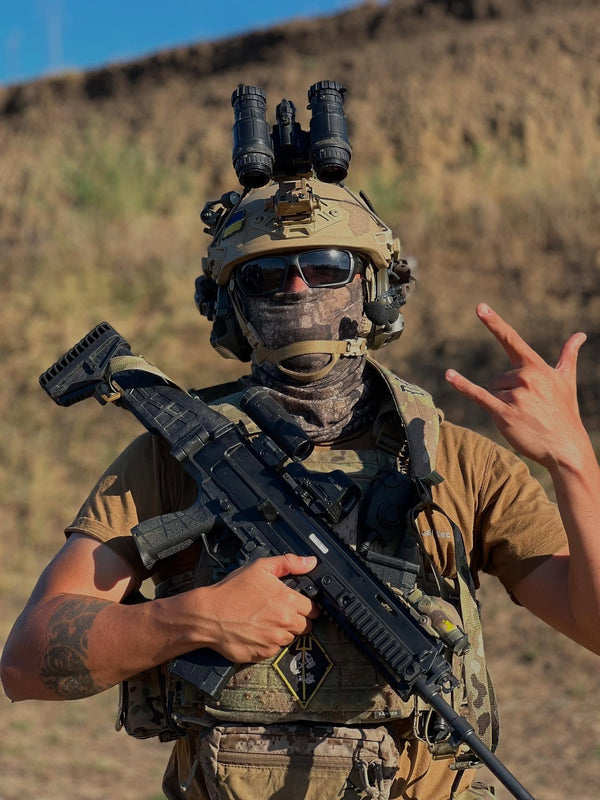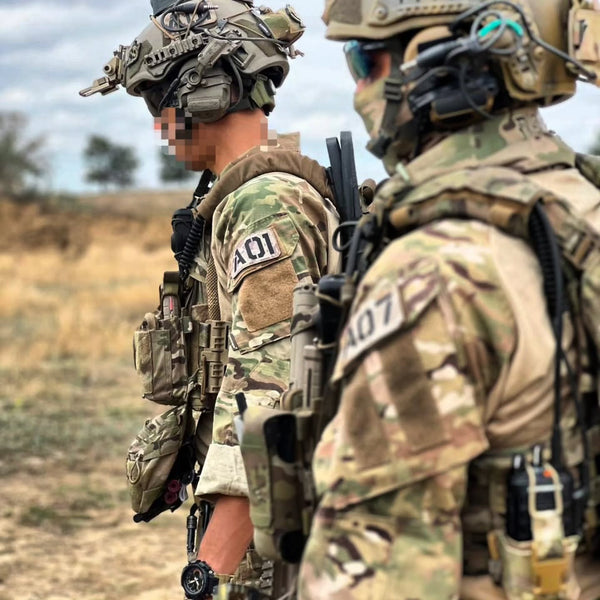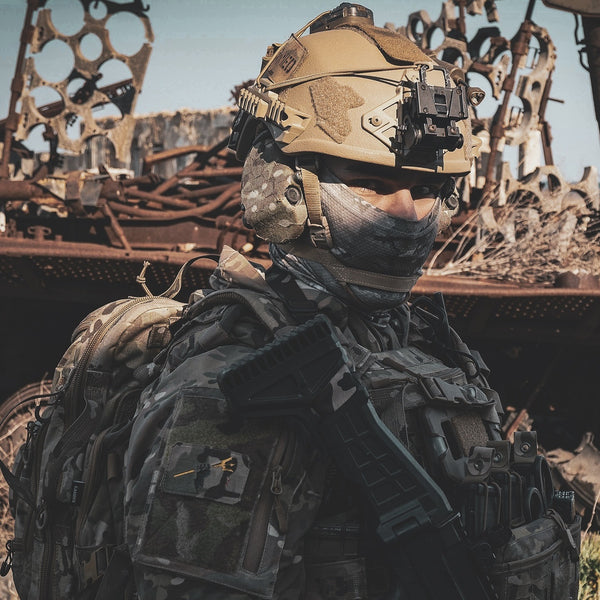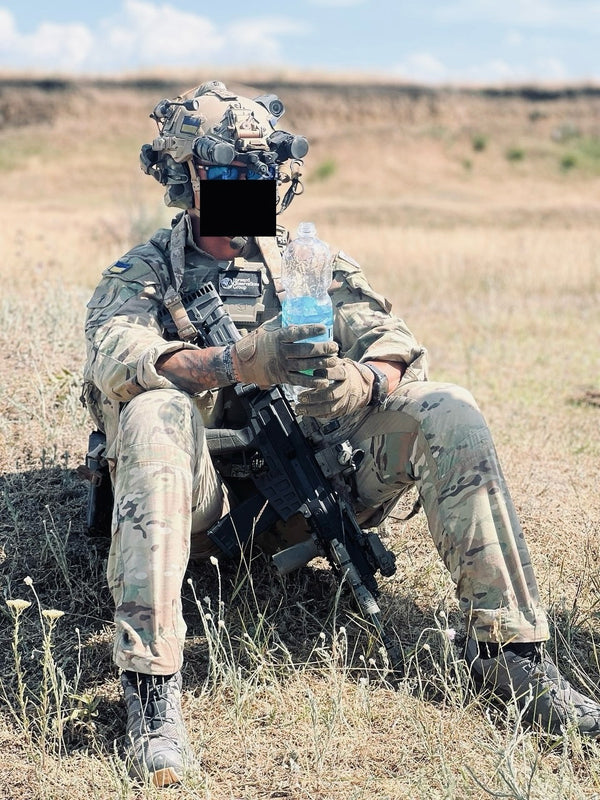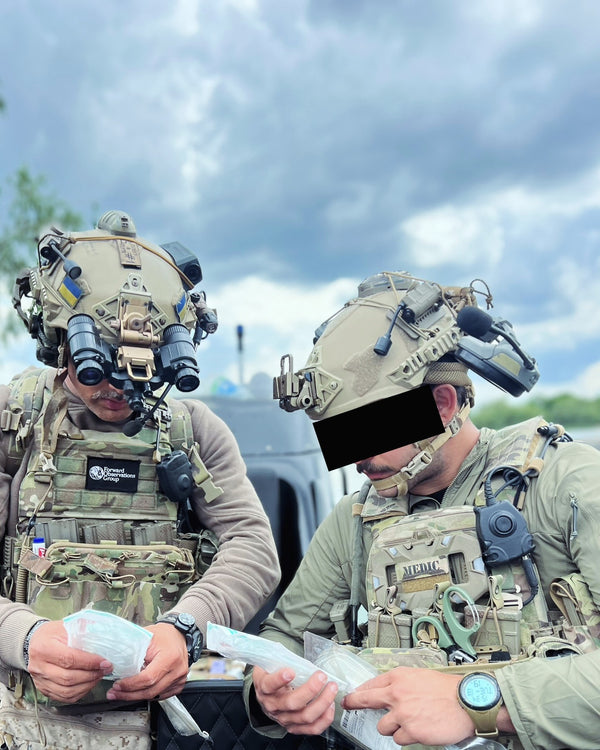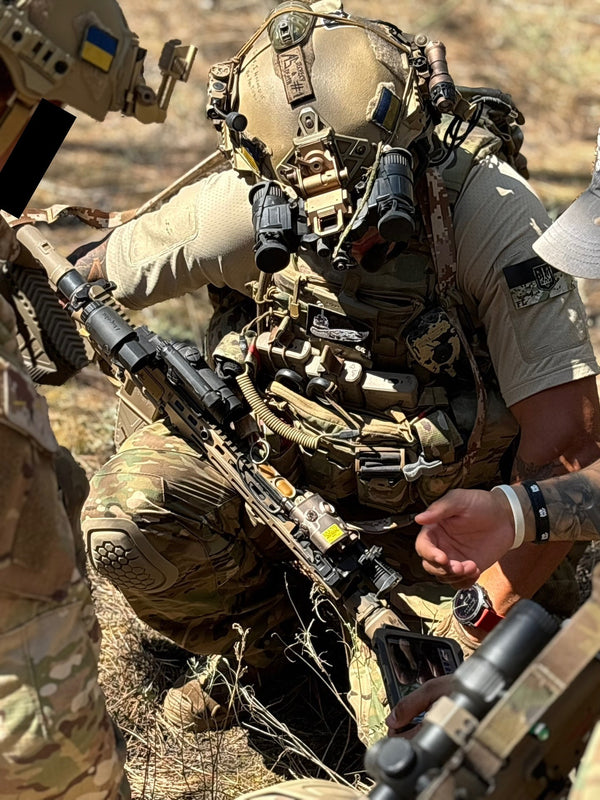


The US Army's current combat helmet is the Integrated Head Protection System (IHPS), and since February 2024 close-combat units have been switching to its successor, the Next-Generation IHPS (NG-IHPS). The Marine Corps wears the Enhanced Combat Helmet (ECH), with a high-cut version for infantry. Special operations forces run high-cut FAST helmets, while the older Advanced Combat Helmet (ACH) remains in service outside the close-combat force.
Below: what each helmet is, how the generations differ, and why each branch chose what it wears.
The US Army: IHPS and the Move to NG-IHPS
The Army began fielding the IHPS in 2018 to replace both the ACH and the ECH in its close-combat units. It is part of the Soldier Protection System, a full set of body armor, eye and pelvic protection designed together rather than piece by piece.
The first-generation IHPS had one compromise: to reach the Army's higher protection level, soldiers had to add a roughly two-pound ballistic applique on top of the helmet. In 2019 the Army quietly fielded about 150 improved IHPS helmets made with a new molding process that removed the need for the applique. Sellers often call these "Gen 2".
NG-IHPS. On February 12, 2024, PEO Soldier fielded the Next-Generation IHPS to about 2,000 soldiers of the 1st Brigade Combat Team, 82nd Airborne Division. The Army describes it as its newest combat helmet, replacing the IHPS, the ACH and the ECH. What changed:
- Protection without the extra weight. The Army says NG-IHPS gives more ballistic and fragmentation protection while cutting the weight previously needed for that level by 40%, and calls its rifle-threat protection world-leading.
- Weight. About 3.27 lb (1.48 kg) in size large, according to Army Times.
- A platform for electronics. Its night vision bracket integrates hearing protection, communications and heads-up displays such as ENVG-B night vision goggles and the IVAS system.
- Mandible protector. A face guard mounts to the front for soldiers in mounted roles; the Army fields it to about 6% of the force.
The Army plans to finish fielding NG-IHPS to all close-combat units within three years of that first issue, so by around 2027. Until then, IHPS, ECH and ACH remain in service side by side.
ACH vs ECH vs IHPS: What Changed Between Generations
Each generation was introduced to fix a specific shortcoming of the one before it.
- ACH, fielded from 2003, replaced the PASGT with a lighter, better-fitting shell derived from the special forces' MICH, with pads and a four-point chinstrap instead of a sling suspension.
- ECH answered the need for more protection at the same weight. It kept the ACH shape but switched the shell from aramid to ultra-high-molecular-weight polyethylene (UHMWPE), which the Army says raised ballistic and fragmentation protection while maintaining a similar weight.
- IHPS answered a different problem: helmets were becoming platforms for night vision and comms, and the bolts that held the chinstrap were weak points in the shell. The IHPS removed them and added rails and a night vision mount.

|
ACH |
ECH |
IHPS |
NG-IHPS |
|
|
Fielded |
2003 |
2013 (Marines first) |
2018 |
2024 |
|
Shell material |
Aramid (Kevlar-type) |
UHMWPE |
UHMWPE |
UHMWPE-based |
|
Shape |
MICH-derived mid cut |
Same as ACH, thicker |
Its own shell shape |
Same outline as IHPS |
|
Chinstrap |
Bolted to shell |
Bolted to shell |
Boltless |
Boltless |
|
Rails and NVG mount |
NVG bracket; rails added aftermarket |
NVG bracket |
Side rails, NVG baseplate |
Side rails, integrated NVG bracket |
|
Weight (approx.) |
~3.2 lb, size large |
Similar to ACH |
~3 lb, size medium, plus 2 lb applique for higher threats |
3.27 lb, size large |
|
Status |
Non-close-combat units, training |
Marine standard; limited Army use |
Being replaced by NG-IHPS |
Fielding to close-combat units through ~2027 |
What these helmets actually stop. Military helmets are specified first against fragmentation, which is why their test data centres on V50 fragment results rather than a single "level". The ECH was procured to protect against select small-arms threats and fragmentation beyond the ACH. Reliable rifle protection without an add-on arrived only with NG-IHPS. In other words, ACH-class helmets should not be read as rifle-proof.
Where the ACH still serves. The ACH has not disappeared. It remains common across units outside the close-combat force and in training, and the Army introduced a lighter ACH Generation II in 2017.
What Helmets Do the Marines Use?
The Marine Corps' standard combat helmet is the ECH. Marines received their first ECHs for deployed units at the end of 2013, and from 2018 the Corps fielded it as the common helmet across the force. Marine and Navy ECHs use an X-back retention system, while the Army version uses an H-back.
High-cut ECH. In 2020 Marine Corps Systems Command began updating the ECH, and from 2021 a high-cut version with side rails went to infantry and infantry-like units. The higher cut leaves room for networked comms and hearing protection, and its circumferential retention adjusts more easily. Marines also reported it fits around a hair bun better than the legacy ECH.
Lightweight Helmet (LWH). The ECH's predecessor, a MICH-derived replacement for the PASGT, still serves in training and non-combat roles.
Marine Raiders and reconnaissance Marines are the exception: like other special operators, they wear Ops-Core high-cut helmets.
The Navy also uses the Lightweight Helmet. Air Force Security Forces moved from the MICH to Team Wendy EXFIL high-cut helmets.
Special Operations: Why Operators Run High-Cut FAST Helmets
US special operations forces wear a different helmet from the rest of the military: the Ops-Core FAST, a high-cut design first shown in 2008. In 2018 US Special Operations Command awarded Gentex, Ops-Core's parent company, a $95 million contract for the FAST SF Super High Cut helmet, and Gentex describes the FAST SF as the primary choice of USSOCOM. Army Rangers moved to the FAST Maritime by 2013–14, and Delta Force adopted the FAST in the mid-2010s.
The reasons come down to how operators work:
- Comms all the time. The high cut leaves the ears clear, so headsets mount on the rails instead of being squeezed under the shell.
- Night vision as standard. A factory shroud and rails carry NVGs, lights and markers without bolt-on kits.
- Weight. FAST helmets were early adopters of UHMWPE and run lighter than standard combat helmets of the same era.
The trade-off is less side coverage around the ears. For a rifleman who rarely wears a headset, the mid-cut ECH or IHPS gives more protected area. For an operator whose job depends on comms and night vision, the high cut wins. How that cut changes a loadout in practice is covered in FAST vs High Cut vs MICH Helmet Setup.
This is also why the FAST outline became the template for the civilian market: most commercial high-cut helmets today copy its shell shape and rail layout. The FAST family itself is explained in our FAST helmet guide.
Can Civilians Buy the Same Helmet?
Partly. Issued IHPS, NG-IHPS and ECH helmets do reach the civilian market through military surplus dealers, usually at several hundred dollars. A surplus helmet has an unknown history, though: you rarely know whether it took an impact, how it was stored, or how worn its pads and chinstrap are. Treat any used ballistic helmet as needing a careful inspection and new pads and retention.
The IHPS family also has its own shell shape, covers and rail interface. Covers and accessories made for ACH, ECH or high-cut helmets do not fit it, which narrows what you can build on a surplus IHPS.
The more practical route is a new commercial helmet in the same shell family the military uses. Commercial high-cut helmets follow the FAST outline that special operators wear, and mid-cut helmets follow the ACH and ECH profile. That is what our range is built on: ballistic helmets in FAST-pattern high cut and mid cut, and complete helmet kits with headset, light and cover already matched to the shell.
Whatever you buy, judge it by its own test documentation rather than by its resemblance to an issued helmet. Our ballistic helmet buyer's guide explains how to read those reports.
FAQ
What helmet did the Army use before the ACH? The PASGT (Personnel Armor System for Ground Troops), nicknamed the "Fritz" helmet for its shape. Introduced in the 1980s, it was the first US helmet made of Kevlar instead of steel, replacing the M1. The ACH replaced it from 2003.
What helmets did US troops wear in Iraq and Afghanistan? Most Army soldiers wore the ACH, often with a MultiCam cover in Afghanistan. Marines started in the Lightweight Helmet and moved to the ECH from 2013. Special operators wore high-cut Ops-Core FAST helmets.