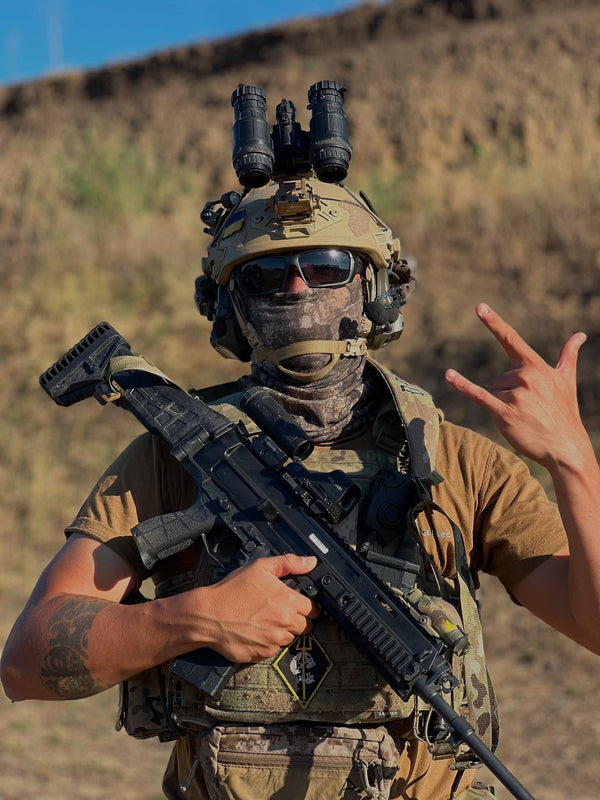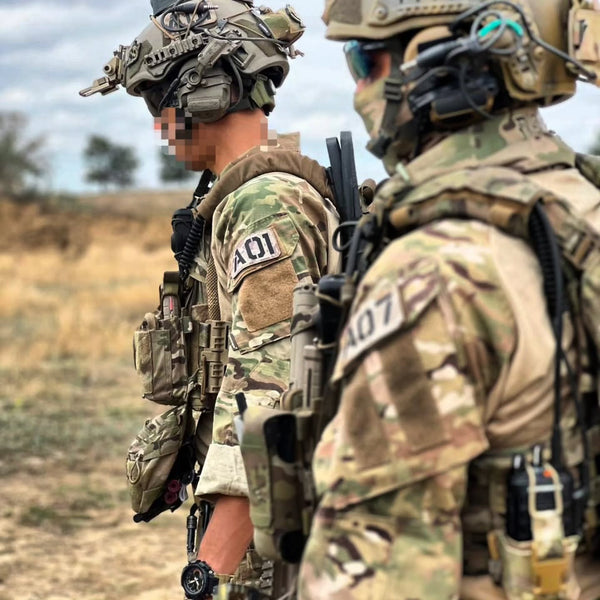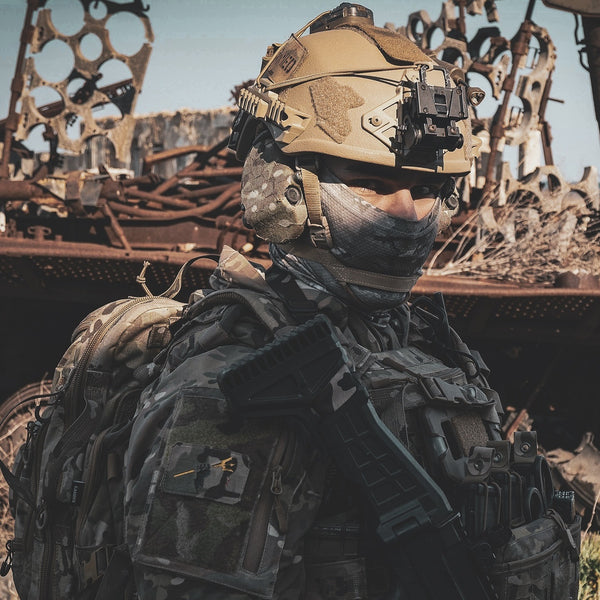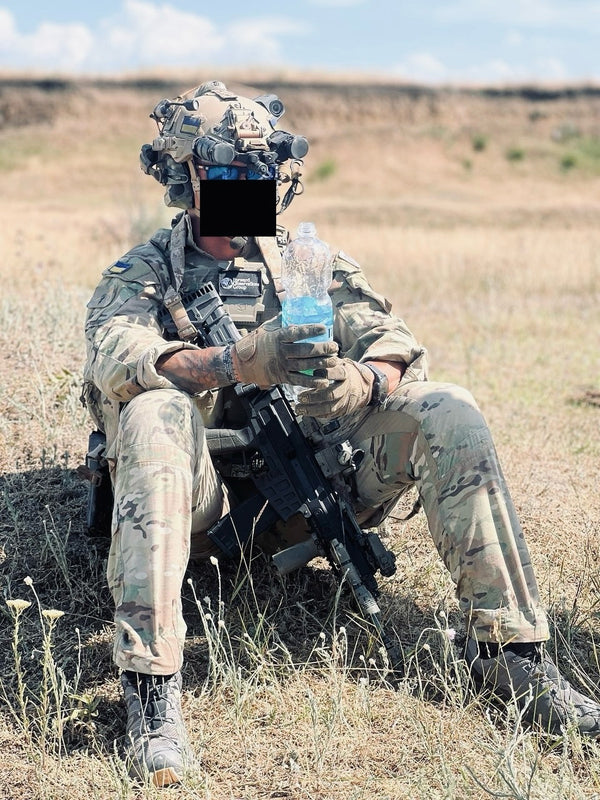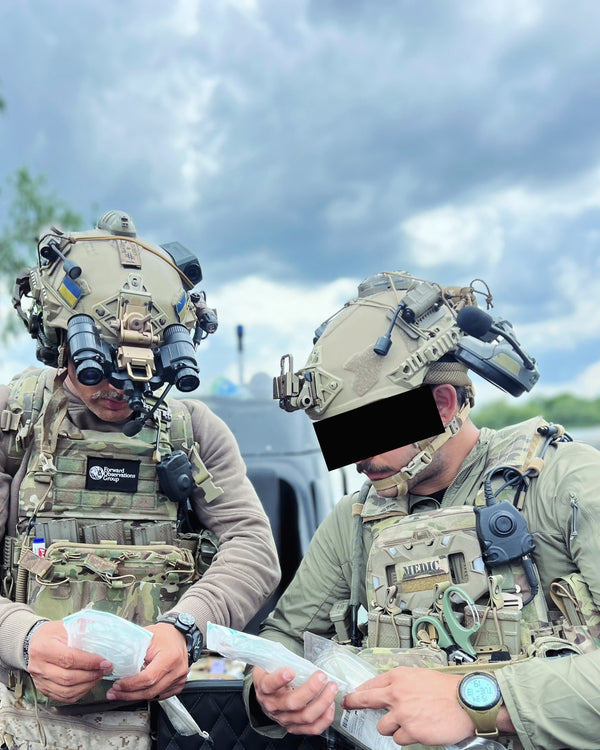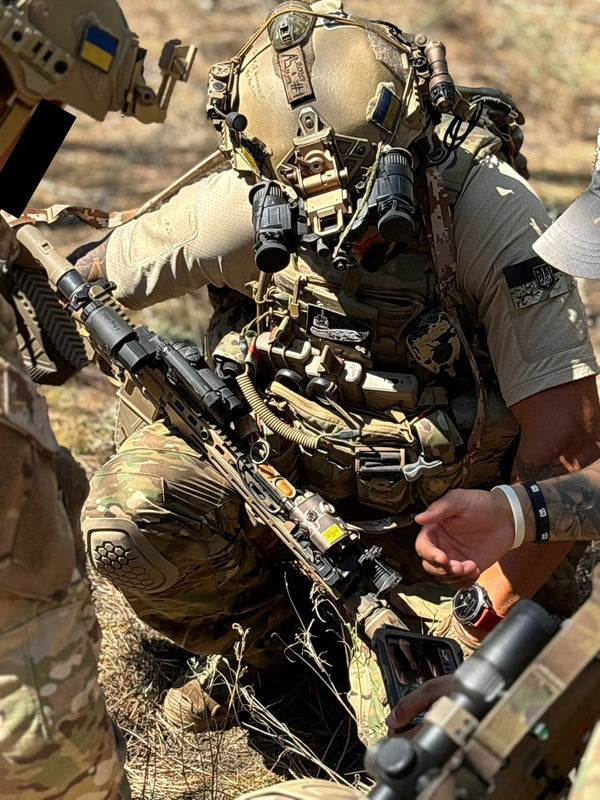

A ballistic helmet is purpose-built headgear designed to reduce injury from specified projectile, fragmentation, and impact threats. Military, law enforcement, explosive ordnance disposal, and private security teams face different threat profiles and equipment requirements, so systems balance coverage, weight, retention, and accessory interfaces. This ballistic helmet buyer’s guide explains how to assess ballistic helmet protection through documented test data. Such systems address specified threats; “tactical helmet” is a broader category, while bump models provide impact protection and equipment mounting. See how ballistic, tactical, and bump helmets differ. A IIIA label alone is insufficient to evaluate a helmet’s complete protection profile. Verify the applicable test method, projectile, velocity, deformation results, and tested configuration; assess fragmentation performance separately through relevant V50 test data.
How ballistic helmets are built
What are ballistic helmets made of? A modern design is an integrated system comprising the shell, internal components, retention, and accessory interfaces. Together, these elements form the wearable protective assembly. The shell supplies the protective structure, while interior components securely position it and manage contact with the wearer’s head. Rail and shroud layouts vary by model.
Ballistic helmets evolved from steel shells to modern composite constructions. Common materials include aramid fibers such as Kevlar® and Twaron®, UHMWPE, and hybrid composites. Aramid is a class of high-strength fibers; Kevlar® and Twaron® are trade names for aramid materials. UHMWPE means ultra-high-molecular-weight polyethylene. A hybrid composite may combine different fibers, matrices, or layer types. These ballistic helmet materials form a shell whose construction is shaped by layer structure, matrix or resin, geometry, thickness, edge treatment, and manufacturing consistency.
The complete system combines the ballistic shell with a liner, comfort and impact-attenuating pads, suspension, and a 3-point or 4-point ballistic helmet retention system. The chin strap and adjustment mechanism secure and stabilize the assembly. Rails provide attachment interfaces, while an NVG shroud supports a compatible night-vision mount. Comfort pads, moisture-managing pad covers, and ventilation also affect usability during extended wear.
Cut profiles describe shell geometry. A high-cut profile provides more clearance around the ears; a full-cut design extends lower around the sides and ear areas; and a mid-cut occupies an intermediate profile. Actual coverage and compatibility vary with model-specific geometry. For practical selection, see how to choose the right helmet cut and fit. For architecture-specific distinctions, compare FAST, MICH, and PASGT system designs.
How ballistic helmet ratings and protection claims should be read
A ballistic helmet rating has practical meaning when tied to a standard or protocol, relevant test conditions, and results for the configuration sold. A label such as IIIA does not provide the full context.
|
Element |
What it shows |
What it does not prove by itself |
|
Test standard or protocol |
How performance is evaluated |
That a particular helmet passed |
|
Test report |
How defined samples performed under stated conditions |
Performance of other models, sizes, or constructions |
|
Marketing claim |
How a manufacturer or seller describes performance |
Independent verification of that performance |
|
V50 |
A ballistic-limit result from fragmentation testing |
A universal protection level without the FSP and method |
|
BFD/BFS |
Deformation measured in a specified test setup |
Fragmentation resistance or a precise injury outcome |
NIJ Standard 0106.01 applies to ballistic helmets and defines Types I, II-A, and II; it does not define Type IIIA. NIJ’s current Compliance Testing Program certifies torso-worn ballistic-resistant body armor, not helmets. In helmet marketing, “Level IIIA” is therefore a claimed handgun-threat performance label, not proof of NIJ helmet certification. Verify the exact protocol, ammunition, velocity, deformation criteria, tested size and construction, and laboratory report.
Fragmentation performance is assessed separately from handgun performance. A ballistic helmet V50 rating is the ballistic-limit result for a defined fragment-simulating projectile, or FSP. Its meaning depends on the FSP type and mass, test method, conditioning, and sample configuration. Two V50 velocities are not directly comparable if tests used different FSPs or methods, even when reported in meters per second.
Backface deformation in ballistic helmets, also called backface signature, is the depth of deformation measured in the backing material behind a test article after a non-penetrating impact in a specified setup. BFD/BFS and V50 describe different aspects of performance: one concerns deformation under defined impact conditions, while the other establishes a ballistic limit in fragmentation testing. A non-penetration result does not predict whether an injury would occur or how severe it might be.
Handgun, fragmentation, and rifle claims require separate evidence. Level IIIA does not establish rifle protection. The designations 5.56×45 mm and 7.62×51 mm identify cartridge families, not universal helmet ratings. Ammunition within the same caliber can differ in projectile construction and performance. A rifle-threat claim must therefore name the exact projectile, mass, velocity, test method, shot locations, coverage area, and complete helmet configuration tested. Specialized systems designed for rifle threats may also add weight and bulk.
No helmet eliminates the risk of penetration, deformation, blunt injury, or injury to uncovered areas. Performance claims apply only within the conditions demonstrated for the tested configuration.
What ballistic helmet accessories are available and useful?
Accessories let you customize a helmet for specific missions — from communications to night operations. The categories of ballistic helmet accessories serve distinct functions:
-
NVG shrouds and mounts connect the helmet to a night-vision device. The shroud provides the helmet interface, while a compatible mount connects the device. Shroud, mount, device, hardware, and helmet geometry must all be compatible.
-
Side rails provide attachment interfaces for lights, cameras, adapters, and other supported devices. Rail geometry and hardware determine compatibility.
-
A hearing-protection and communications setup may include a headset, rail adapters, and a PTT. Check ear-cup clearance, rail-adapter fit, headset connectors, and PTT compatibility. Active tactical hearing protection and communications require a separate review.
-
Helmet-mounted lights and markers may use white, red, or IR output for navigation, signaling, or identification. Check battery type, IP rating, and mounting interface.
-
Replaceable pads and liner kits support fit adjustment, moisture management, and replacement of worn interior components. They should not be assumed to improve impact performance without test data for the configuration.
-
A ballistic helmet cover can provide camouflage, identification, and abrasion protection. Depending on its design, it may include hook-and-loop or MOLLE panels, battery and counterweight pockets, cable-routing points, rail or shroud cutouts, and drainage openings.
-
Counterweights shift the system’s center of mass but also increase its total weight. Protection claims for visors and mandible components should be limited to the threats, coverage area, and complete configuration supported by relevant test data.
Compatibility depends on exact interfaces, not similar appearance. The assembled system must be evaluated for component clearance and total configured weight. Never drill a ballistic shell to add an accessory unless the helmet manufacturer expressly authorizes the modification. Replacement fasteners and other hardware must follow the manufacturer’s instructions.
How to verify a ballistic helmet claim
A product description is insufficient. A ballistic helmet test report should identify:
-
exact model designation;
-
shell size and construction;
-
standard or protocol;
-
projectile or FSP type and mass;
-
impact velocity and shot locations;
-
penetration and deformation results;
-
V50 and conditioning, if applicable;
-
laboratory and test date;
-
sample configuration;
-
batch or lot traceability.
We can apply this check to Blender™ Ballistic FAST Helmet NIJ IIIA – Black Tactical from our catalog. Its page states resistance to 9×19 mm Luger/Parabellum and 9×18 mm PM/APS rounds and a V50 of approximately 695 m/s with a 17-grain projectile.
Protocol No. 20.406 identifies Blender-marked UHMWPE FAST helmets. One received five 8.0 g 9 mm Luger impacts at 363–369 m/s; another received five 5.9 g Pst 57-N-181s impacts at 338–347 m/s. Neither was penetrated. MORATEX Report No. 011/2025U records V50 values of 695.2 and 698.8 m/s for Blender Ukraine M–L High Cut helmets tested under STANAG 2920 with a 1.1 g FSP.
The reports support those claims only for the tested Blender samples under the stated conditions. Production records must link the samples to the current model. They do not establish formal certification, a 731 m/s V50, BFD, or performance in other configurations.

Inspection, care and replacement
The manufacturer of each model sets its cleaning, inspection, and replacement procedures; there is no single service-life limit that applies to all helmets. For routine ballistic helmet maintenance, clean removable pads and covers only as instructed, without unapproved solvents. Inspect the shell surface and edges for cracks, deformation, or suspected delamination. Also check:
-
rail and shroud hardware;
-
retention straps, buckles, pads, and liner components;
-
corrosion, contamination, and trapped moisture;
-
battery compartments and electronics;
-
unauthorized holes or modifications.
Store the helmet within the manufacturer’s specified temperature and humidity limits, and protect it from UV exposure as instructed. Electronics, pads, straps, and other replaceable components may have requirements different from the shell. Maintain and replace each component according to its applicable instructions rather than assuming one replacement interval for the complete system.
After a ballistic event, severe impact, or suspected structural damage, do not return the helmet to service until the manufacturer’s required inspection or replacement procedure is complete. Exposure outside permitted storage or operating conditions may also require evaluation.
Ballistic helmet FAQ
Does a helmet cover add ballistic protection?
No. A standard fabric helmet cover does not change the shell’s ballistic rating or provide additional ballistic protection. It is used for camouflage and identification, helps protect the helmet’s finish from abrasion, and can organize cables and attachments. Any protective claim would require separate testing of the complete configuration.
What is an HHV helmet cover?
In helmet-related searches, HHV usually refers to Hard Head Veterans, a helmet brand. It does not describe a cover characteristic. HHV covers are designed for the brand’s ATE helmet line and, according to the manufacturer, fit most high-cut or FAST-style helmets.
Evaluate ballistic helmet protection at the level of the complete, documented configuration: applicable test data for the stated threats, shell construction, fragmentation and deformation results, retention, accessory interfaces, total configured weight, and manufacturer instructions. Purchasing decisions also require a separate review of price, seller documentation, warranty, and total system cost. Selecting a specific helmet requires matching its size, fit, cut, and complete equipment setup to the intended use.