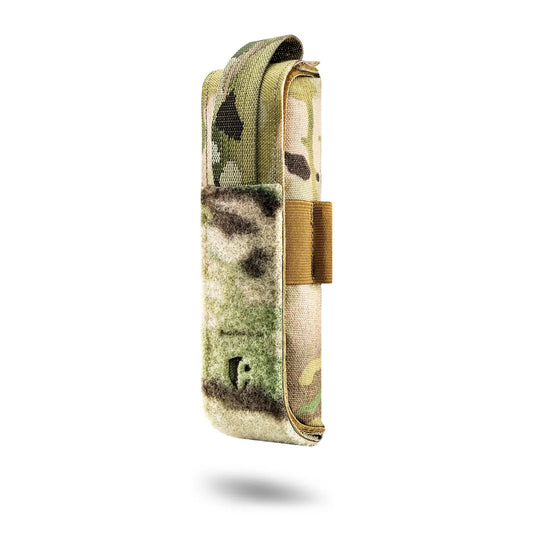
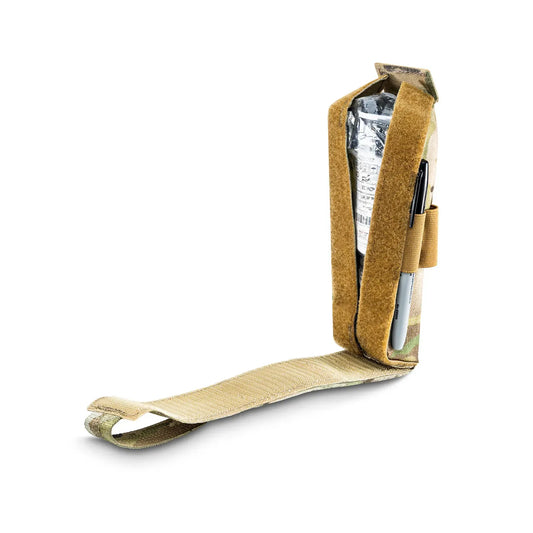
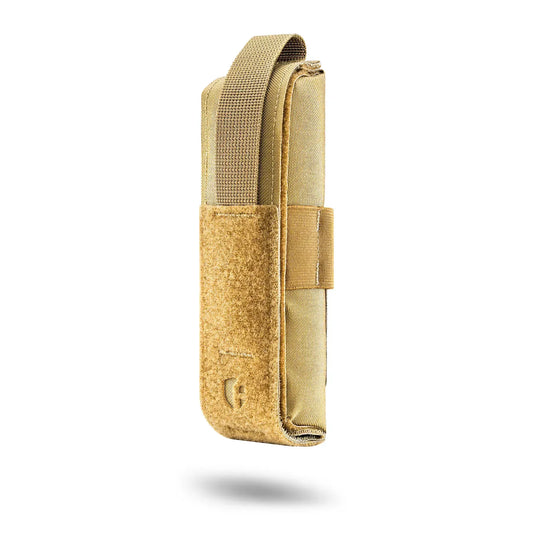
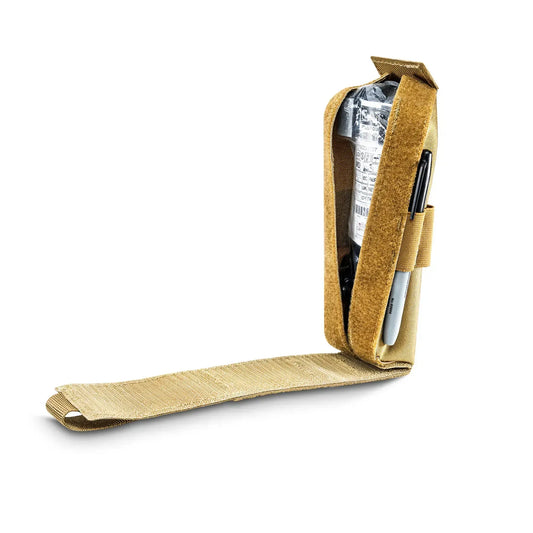
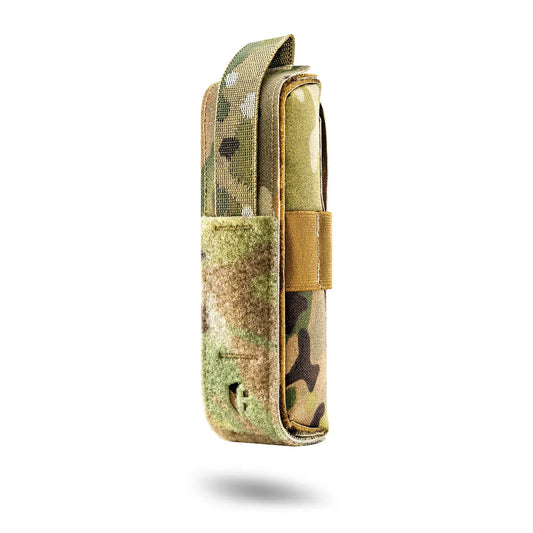
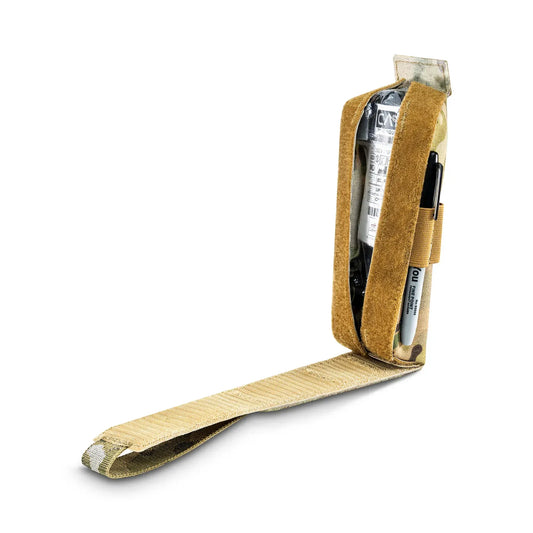
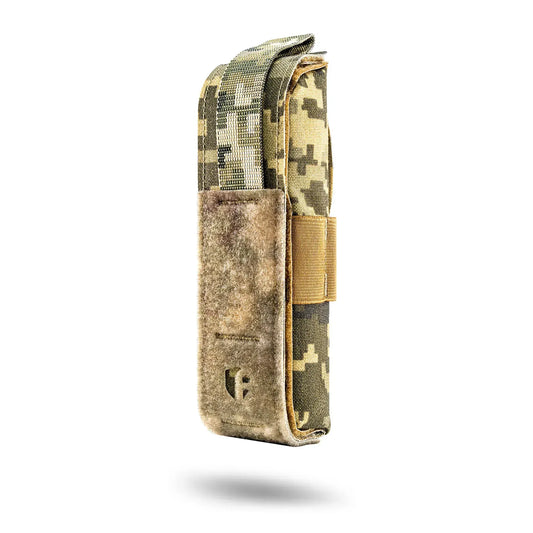
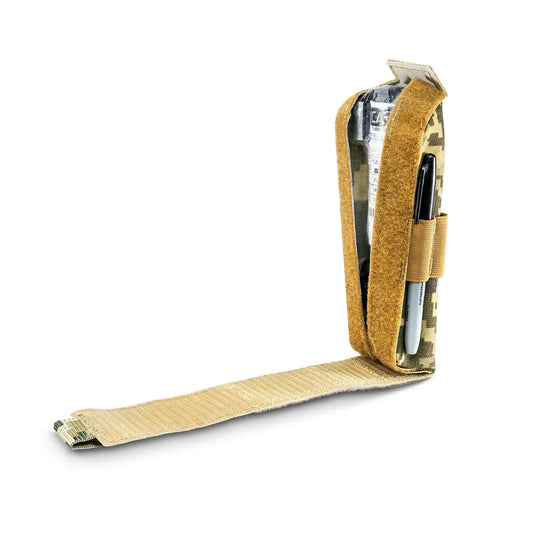
Tourniquet pouch: keeping your TQ accessible in every situation
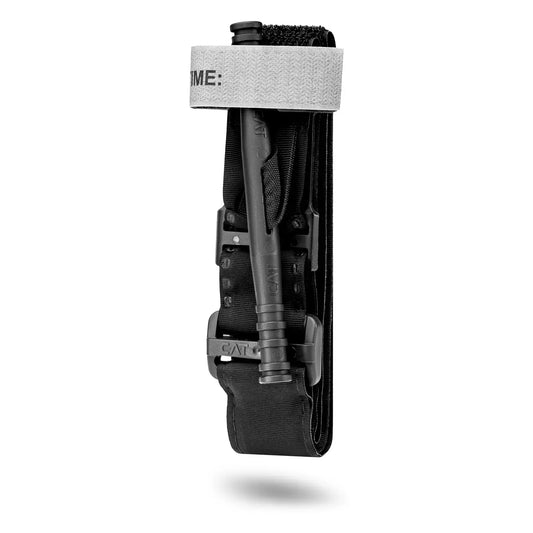
A well-organised tactical setup often makes the difference in an emergency. This is especially true for medical gear, where every second counts. That’s why a tourniquet holder has become a must-have for soldiers, law-enforcement officers, medics and anyone training in tactical medicine. A well-designed tourniquet pouch keeps your CAT or other model protected, secure and always within easy reach.
When your gear is laid out properly, your actions are faster and more precise. A dedicated tourniquet holster lets you position your TQ for instant access, even under stress, in low light or with limited mobility.
Having a specific tourniquet case on your kit is a huge advantage when things go wrong. In a major bleed, seconds really are critical; a dedicated tactical tourniquet holder means you can draw the TQ quickly, ideally with one hand, instead of digging through an IFAK. It also helps keep your medical loadout organised, instead of mixing the tourniquet in with bandages, gloves and other items.
Key features of a reliable tourniquet holder
A good tourniquet pouch has to do two things at once: open fast and keep the TQ firmly in place when you’re moving, running or going to ground.
Important features to look for include:
- true one-hand access so you can pull the tourniquet even if the other arm is injured;
- enough rigidity to keep its shape for a clean draw;
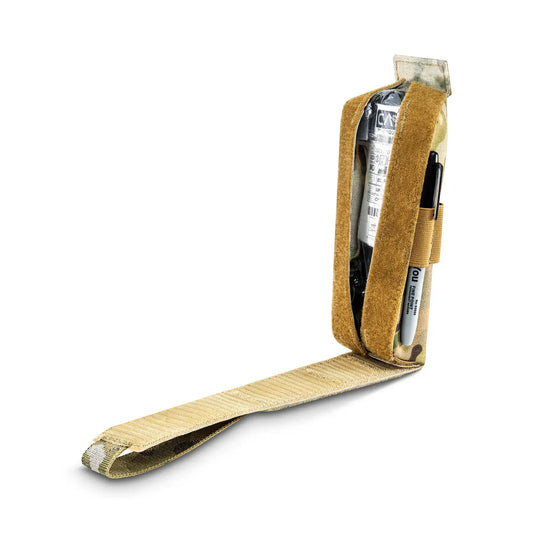
- quality closures – elastic retention, flaps or a Velcro tourniquet holder design that won’t pop open accidentally.
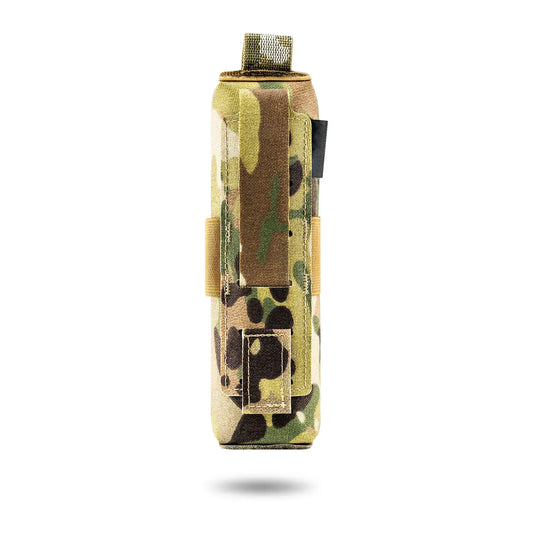
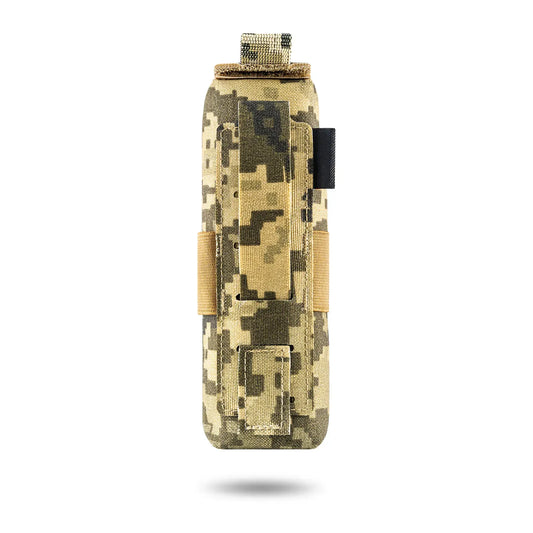
Attachment is just as important as the pouch itself. A molle tourniquet pouch should mount solidly on webbing, while a tourniquet holder for vest or plate carrier needs to sit where your hand naturally goes under stress. If you prefer a belt setup, choose a tourniquet holder for belt that doesn’t slide, twist or dig into your hip when you move. The goal is simple: the holder is always in the same place, and your hand finds it automatically.
Multicam tourniquet pouch and other tactical camo options
Today there are plenty of colourways and camouflages to choose from. One of the most popular is the Multicam tourniquet pouch, because it blends into a wide range of environments: dry fields, woodland edges, even urban settings.
Matching your tourniquet holster to the rest of your rig isn’t just about style. A pouch that blends in makes your overall profile cleaner and less visible, which can be a real tactical advantage. For some users it’s mainly an aesthetic choice; for others, a Multicam tactical tourniquet holder is part of maintaining consistent camouflage across all their gear.
Materials, durability and comfort in use
Materials matter. A quality tourniquet case is usually built from Cordura or a similar heavy-duty fabric. This gives you resistance to abrasion, moisture and impact – exactly what you need when the pouch lives on the outside of a vest or belt.
Reinforced stitching, bartacks at stress points and finished edges make the holder much more durable in the field. The volume and stiffness of the pouch also affect comfort: it should be rigid enough for a clean draw but not so bulky that it catches on seatbelts, slings or door frames. Placement matters too – your tourniquet holder shouldn’t dig into your ribs, snag on kit or interfere with drawing a weapon or accessing magazines.
How to choose your tourniquet pouch on BlenderTac
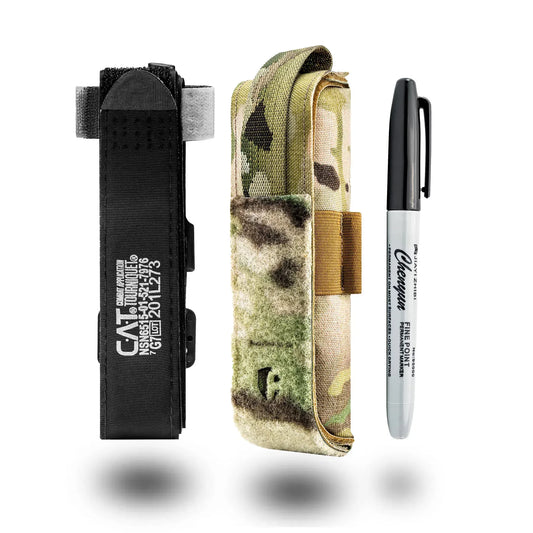
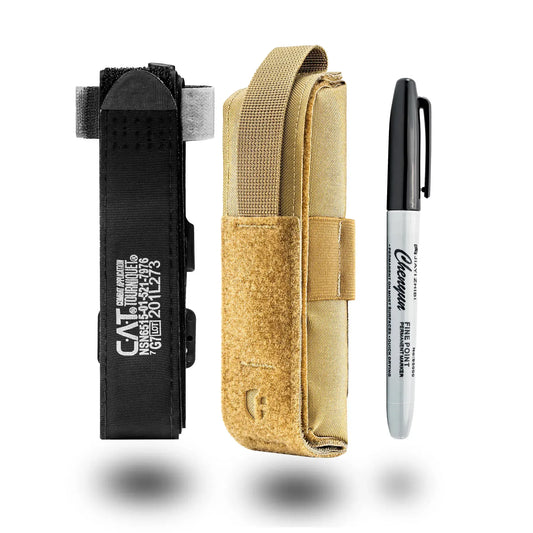
When you’re choosing a tourniquet pouch on BlenderTac, start by thinking about your setup and your real needs: do you want a simple holder or a complete kit with tourniquet and marker?
You’ll usually see two main options:
- standalone tourniquet holder that fits common models;
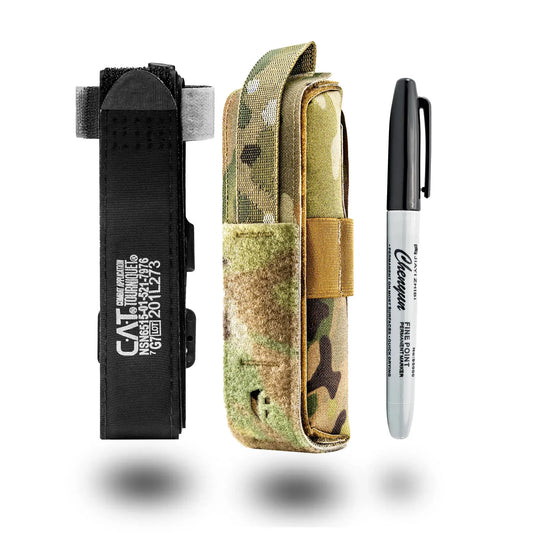
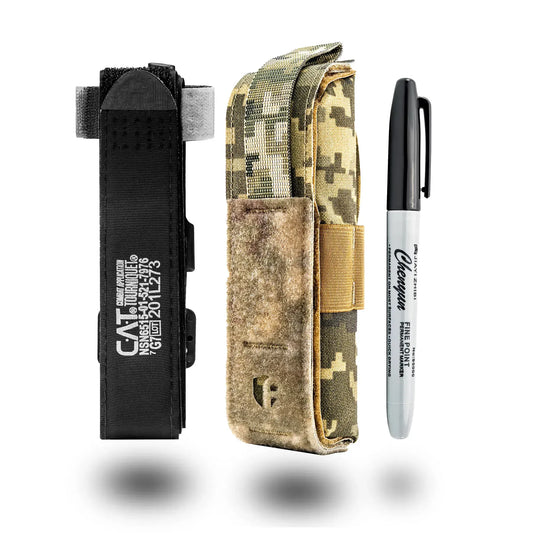
- all-in-one kits that include the TQ, tourniquet case and marker ready to mount on your gear.
Pick what fits your use: a universal molle tourniquet pouch you can move between carriers and belts, or a dedicated kit that lives on one specific rig. Always check compatibility with popular tourniquets like CAT, SOFTT-W, RMT and others – a good fit prevents wobble, loss of retention or the TQ getting stuck during the draw.
To make your holder last, clean it when it gets muddy, check the hook-and-loop and elastic regularly, and avoid leaving it soaked for long periods. Try to avoid common mistakes like mounting the pouch where you can’t reach it with either hand, over-tightening the Velcro so it’s hard to open, or burying it behind other gear. The whole point of a tourniquet holster is speed – set it up once, test it under stress, and make sure it will work exactly the same when you really need it.