
Before you buy a ballistic helmet: how to verify protection claims, total cost, and seller terms
Choosing the right ballistic helmet means balancing protection, weight, comfort, and mission needs. This ballistic helmet guide focuses on purchase decisions: price, package contents, product documentation, seller transparency, and total purchase cost. Before paying, verify evidence supporting protection claims, what the listed configuration includes, which components require separate purchase, and the applicable warranty, return, and support terms. For related guidance, see how ballistic helmet ratings and test reports work and how to choose the right helmet size, cut, and setup.
Are cheap ballistic helmets safe?
Yes — there are lower-cost options on the market. Low price alone does not prove that a helmet is safe or unsafe.
What to watch for when evaluating price vs safety:
-
Configuration. Lower prices can reflect a standalone configuration, fewer included accessories, basic liner or retention hardware, older configurations, promotions, or clearance. Simpler suspension systems, pads, or retention hardware can affect long-wear usability without automatically making the helmet unsafe.
-
Documentation and transparency. Closer verification is needed when the seller cannot link the protection claim to the offered model and configuration. Warning signs include vague claims, unlinked documentation, an unidentified manufacturer, unclear package contents, and inaccessible return or support terms.
-
Pre-owned or older stock. For a pre-owned, surplus, clearance, or older-stock helmet, lower price may reflect age, handling, incomplete provenance, or reduced support rather than protection quality alone. Verify manufacturing information, storage and impact history, remaining support, and whether documentation links to the item offered. Photographs cannot establish ballistic integrity.
-
Non-ballistic use. For airsoft, paintball, or activities not requiring ballistic protection, a clearly labeled bump or non-ballistic helmet may be appropriate. It should not be presented or purchased as ballistic protection.
How much does a ballistic helmet really cost?
The listed price is only the starting point. What matters is the total cost of a usable configuration. Shell material, weight, manufacturing method, warranty, and support affect price; compare exact configurations.
As of August 2026 update, standalone BlenderTac ballistic helmets are €389–€449; Desert Tan Tactical is €389. In the BlenderTac catalogue, complete kits range from €489 to €1,079 depending on included equipment. The €489 price is promotional, so recheck product pages; it should not be treated as permanent.
Standalone helmet vs ready-made kit: what is included?
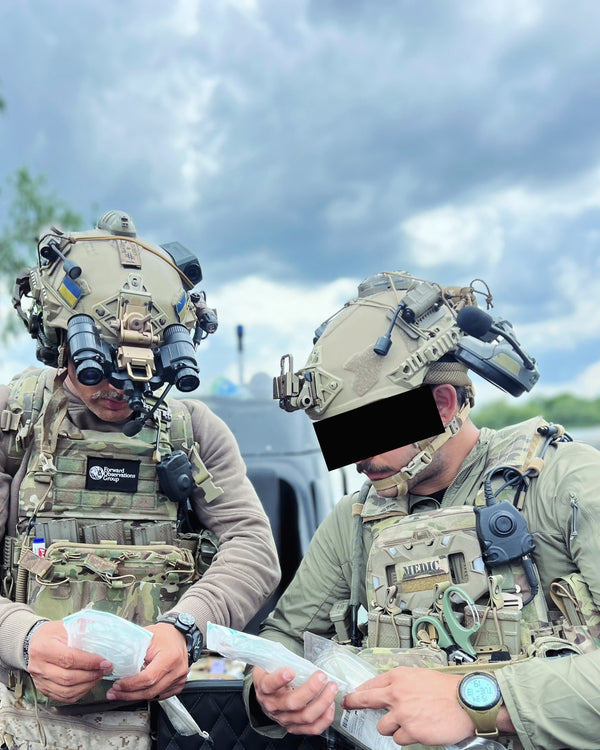
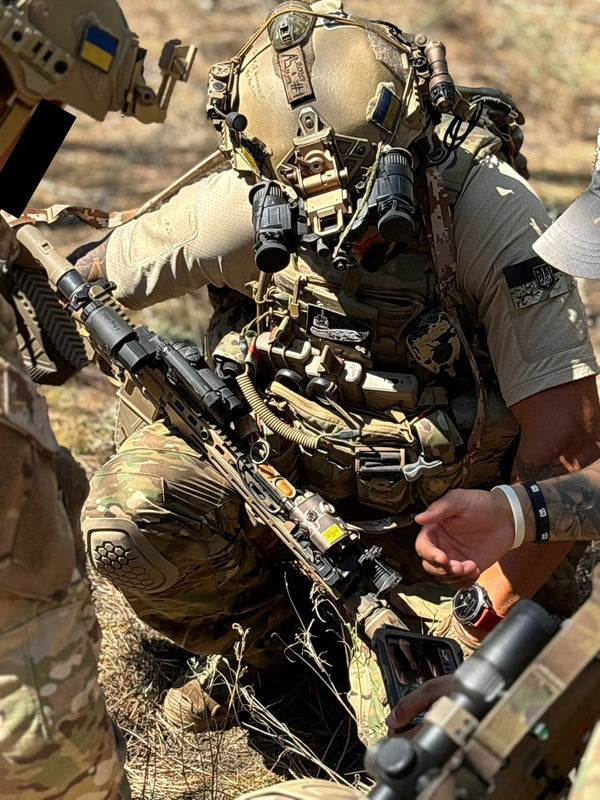
Accessories tailor a helmet to specific tasks and may improve comfort. Check what is included, optional, shown but sold separately, or still required. A kit can save time, reduce incompatibility risk, and cost less than buying identical items separately. Those benefits depend on the package; the word kit does not guarantee them.
|
Compare before buying |
Standalone helmet |
Ready-made kit |
|
Base package |
Confirm shell, pads or liner, suspension, retention, chin strap, rails, and shroud. |
Verify the helmet configuration, each accessory model, and which pictured items are included. |
|
Items still required |
Price the required cover, light, headset, adapters, communications components, cables, battery pouch, counterweight, and hardware. |
Match package contents to the intended setup and price every required item missing. |
|
Compatibility |
Verify each mount, rail, adapter, and connector interface. |
Ask which helmet-to-accessory and accessory-to-accessory interfaces were checked together. |
|
Future service |
Confirm replacement pads, retention hardware, and mounts are available. |
Confirm whether helmet and electronic components can be replaced separately and what support covers. |
|
Delivery and return costs |
Include delivery, import or customs charges, and returns across separate orders. |
Check whether a faulty component or the entire kit must be returned; include replacement and return costs. |
Total purchase cost = helmet or kit + missing components + future service or replacement costs + applicable delivery, import, and return costs.
What should you verify before ordering a ballistic helmet?
When deciding what to look for when buying a ballistic helmet, start with documentation linked to the offered product, explicit package contents, an identifiable product and source, and accessible warranty, return, support, and delivery terms.
Does the seller-provided report match the product?
A ballistic helmet test report is relevant only if its model designation and tested configuration link to the product offered and shipped; listing claims are insufficient. Check the source and date, compare the report with the listing and package contents, and ask about gaps.
Results do not automatically apply to helmets with a similar shell, name, or rating label. If a product claims rifle protection, request documentation for the complete configuration before paying a premium.
Can the product and seller be traced?
Confirm manufacturer and seller contacts, exact model, manufacturing source, and applicable batch, lot, or serial data. BlenderTac identifies configurations and components, links reports, and publishes business contacts.
What do warranty and replacement support cover?
Check the ballistic helmet warranty duration, covered defects, exclusions, separate shell and electronics terms, post-damage or ballistic-event procedures, availability of pads, retention hardware, mounts and electronics, and replacement or upgrade options. BlenderTac lists email and messaging contacts for written confirmation of warranty coverage and post-event procedures. Manufacturer reputation does not replace product-specific test documentation and clear terms.
Can you return it, and when will it ship?
Under BlenderTac’s ballistic helmet return policy, request a return within 14 days of receipt. The item must be unused and in original condition, with packaging and accessories; buyers pay return shipping. Check the authorization and inspection requirements. If the return is approved, the refund may take up to 30 days after the item is received and inspected.
For kits, confirm stock, preparation time, and component availability. Before ordering, check destination-specific ballistic helmet delivery terms, carrier estimates, customs processing, import costs, and whether the order may arrive in separate parcels.
What is the best ballistic helmet for the money?
There is no universal “best” ballistic helmet. The best-value option is the one whose documented performance matches the defined need, whose complete package and total price are transparent, and whose seller provides clear support and return terms.
Apply four criteria:
-
Requirement match excludes any offer whose model-specific documentation does not support the defined need.
-
Package completeness shows which items must still be purchased.
-
Comparable total cost accounts for the same set of components in every offer, avoiding comparison between a standalone helmet and an equipped kit.
-
Long-term support assesses the return process and access to service and replacement components.
Use this model to compare its current price, package contents, test documentation, sizes, configured weight, compatible equipment, replacement options, and return terms.
If you want a certified, mission-ready helmet that balances protection, modularity, and comfort—especially for tactical operations—consider a modern high-cut NIJ IIIA helmet with proven suspension, rail systems, and compatibility with comms and NVG gear. For a concrete example that meets NIJ IIIA standards, offers a professional suspension system, side rails, and high-cut compatibility, consider as an option to review alongside independent test data and sizing options.

Premium pricing cannot replace documentation, and a large kit adds unnecessary cost when its equipment is not needed. Unused equipment should not be treated as added value simply because it is bundled.
Neither a lower nor a higher price determines value or protection. Compare the documented configuration, complete package cost, replacement options, and current seller terms. Confirm the correct size and test the intended equipment setup before use.
Always verify sizing, try the helmet with the accessories you plan to use, and confirm the certification paperwork before purchasing. Proper fit and certified protection are the most important factors when your safety is on the line.