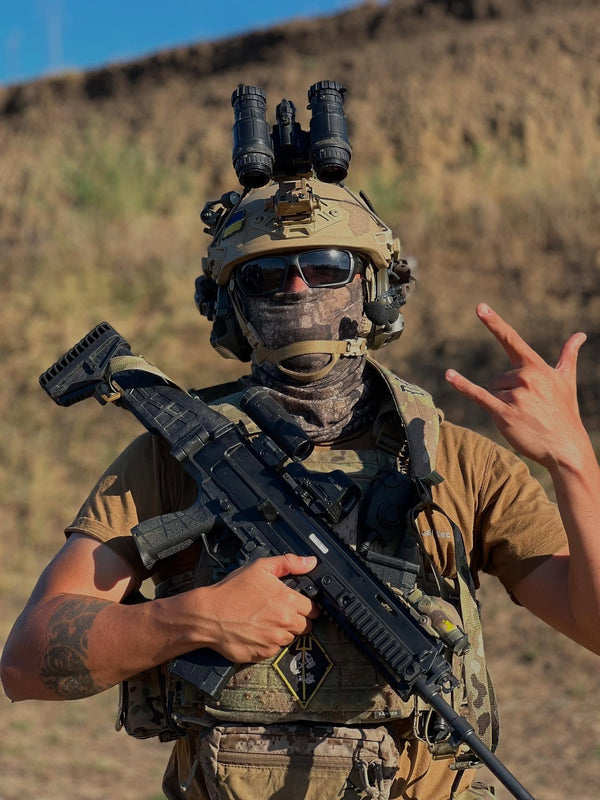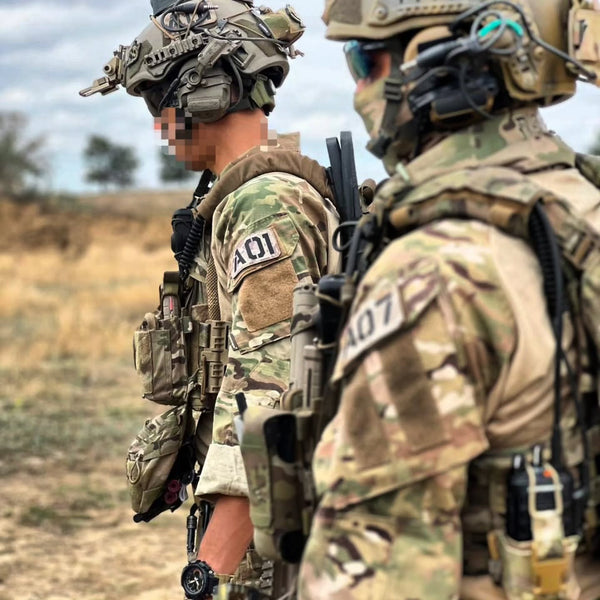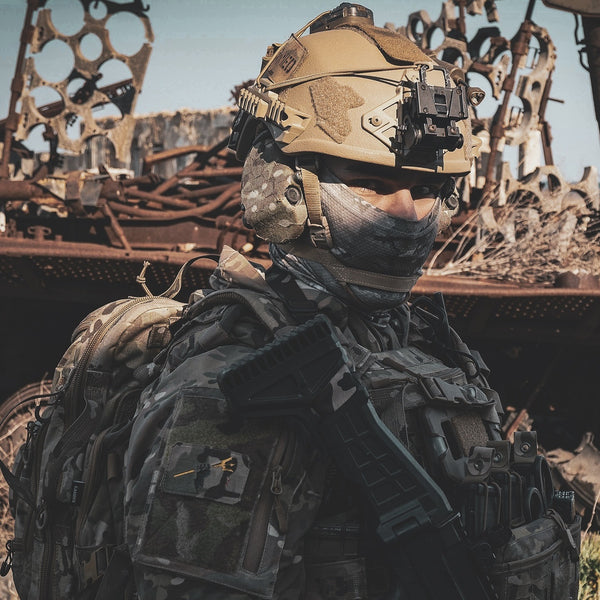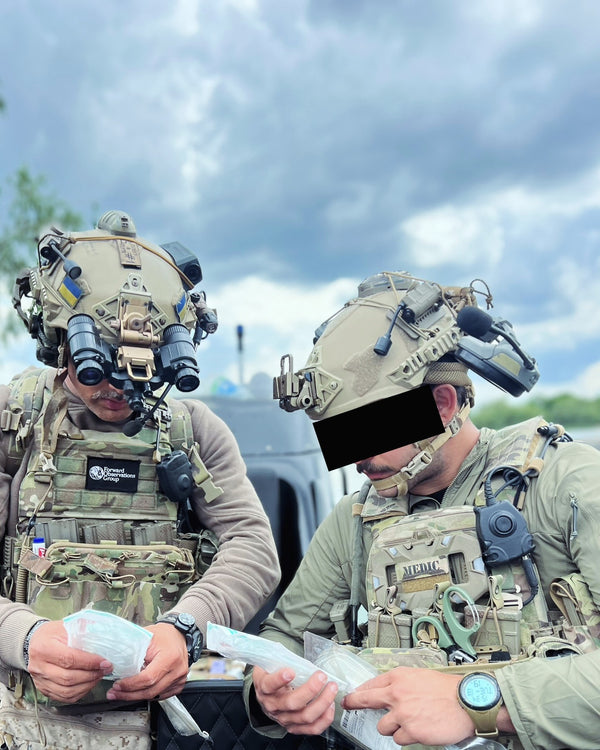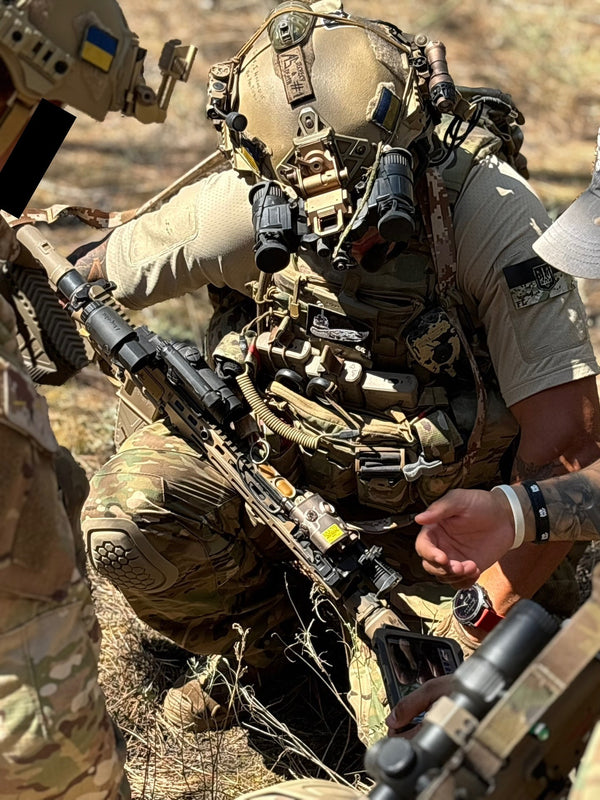


A plate carrier holds ballistic plates; a chest rig carries gear and holds no armor at all. That is the whole difference in one sentence, and it gives you the deciding question: do you need protection from gunfire? If yes, you need a plate carrier. If not, a chest rig does the job lighter and cooler. Many people end up owning both and wearing them together.
Below: what each one is, how they compare, when to pick which, and how to run a chest rig over a plate carrier.
What a Plate Carrier and a Chest Rig Actually Are
A plate carrier is a vest built around two pockets for armor plates, one over the chest and one over the back. A cummerbund wraps around the sides to stabilise the plates and, on many models, holds soft side armor. The outer surface is covered in MOLLE webbing or laser-cut slots for pouches. The most common plate size is 10×12 inches (25×30 cm). Without plates inside, a plate carrier is only a load-bearing vest.
A chest rig is a harness, usually H- or X-shaped straps across the back, with a panel of pouches on the chest. It carries magazines, a radio, a med kit and small tools, but no armor. The back is often open mesh, so it breathes.
Between the two sits the placard: a detachable front panel of pouches that clips onto a plate carrier or takes its own straps and becomes a chest rig. More on that below.
How pouches attach to both platforms is covered in What Is MOLLE?
Chest Rig vs Plate Carrier: Side-by-Side Comparison
|
Plate carrier |
Chest rig |
|
|
Ballistic protection |
Yes, once plates are fitted; plates are bought separately |
None |
|
Weight |
Carrier alone around 1–1.6 kg; each rifle plate adds several kilograms depending on material |
Usually well under the weight of an empty carrier |
|
Torso coverage |
Front, back and, with soft inserts, sides |
Front pouch panel only |
|
Heat and ventilation |
Covers the torso front and back; traps heat |
Open mesh back; breathes |
|
Magazine capacity |
Limited by the front panel; often three or four rifle magazines |
The whole panel is for gear; usually as much or more |
|
Donning and doffing |
Slower; quick-release models help |
Fast; a few buckles |
|
Profile |
Bulkier, especially with side plates |
Low and close to the chest |
|
Vehicles and prone |
Plates and cummerbund add bulk in seats and when lying down |
Easy to move in, though a full rig can lift the chest when prone |
|
Total cost |
Carrier plus plates; plates often cost more than the carrier |
Rig and pouches only |
Three rows decide most purchases. Protection is either there or not; no chest rig turns into armor. Weight and heat grow fast once plates go in, and they decide how long you can wear the kit comfortably. Cost is easy to underestimate for a plate carrier, because the carrier is only the shell and the plates are a separate, usually larger, purchase.
When to Choose Each One
Start with three questions:
- Is there a realistic threat of gunfire? If yes, you need a plate carrier with plates. Everything else is secondary.
- How long will you wear it, and how hot is it? Long movements, steep terrain and summer heat favour the lighter, ventilated chest rig.
- How much do you need on your chest? If you carry more magazines and kit than a carrier's front panel holds, a chest rig or a placard gives you the space.

Choose a plate carrier for:
- duty, security and combat roles where armed threats are part of the job;
- close-quarters and urban work, where engagement distances are short;
- any situation where you would want armor more than mobility.
Choose a chest rig for:
- range training and courses with no live threat;
- hunting and long patrols in the field;
- hot climates, mountains and long marches, where weight and heat wear you down;
- driving, where a slim front is easier to work in;
- airsoft, where armor adds weight and nothing else.
The chest is not the only place for gear. A battle belt carries the med kit, dump pouch and spare magazines low on the hips, which frees space on whichever chest platform you choose.
Our plate carriers take standard 10×12-inch plates; plates are not included. For carrying gear without armor, the chest panels range covers lighter chest bags and pouches.
Can You Wear a Chest Rig Over a Plate Carrier?
Yes, and it is one of the most common ways to set up. The usual pairing is a chest rig over a "slick" plate carrier, meaning one with nothing mounted on its front. The appeal is flexibility: the rig holds your magazines and kit in both modes. Take the carrier off and the rig stays on; put the carrier on and the rig goes over it.
The catch with a classic harness. A traditional H-harness chest rig sits on top of the carrier rather than attaching to it. Its straps bunch over the carrier's shoulders, the rig adds a second layer on your chest, and it can stop the cummerbund from tightening properly. For occasional use this is fine; for regular use it gets uncomfortable.
The cleaner solution: a placard. A placard is a chest rig without its own back. It attaches directly to the front of the plate carrier, usually with hook-and-loop on the back plus quick-release buckles at the top corners. When you want to go without armor, you fit shoulder and waist straps to the same placard and wear it as a chest rig. This is what most "plate carrier chest rig combo" setups are: one carrier, one placard, two ways to wear them.
To set either version up well:
- Ride height. Mount the rig high enough that its pouches clear your belt and do not dig into your stomach when you sit or kneel.
- Lock the lower corners. Connect the bottom of the rig or placard to the cummerbund so it does not swing away from the carrier when you move.
- Leave airflow. With both worn together, use a mesh-back rig and avoid stacking full pouches on both layers.
Some carriers come with a removable front panel already. The FamTac M8, for example, ships with a removable MOLLE front panel, so you can change the chest layout without changing the carrier.
FAQ
Does a plate carrier protect you without plates? No. The carrier is fabric and webbing; the protection comes entirely from the plates inside. Without them it is a load-bearing vest, and some people do wear it that way for training.
Can a chest rig hold a plate? Some chest rigs have a pocket or bag behind the pouch panel for a single front plate. That gives you frontal protection with less weight and heat than a full carrier, but nothing on the back or sides. It is a compromise, not a substitute for a plate carrier.