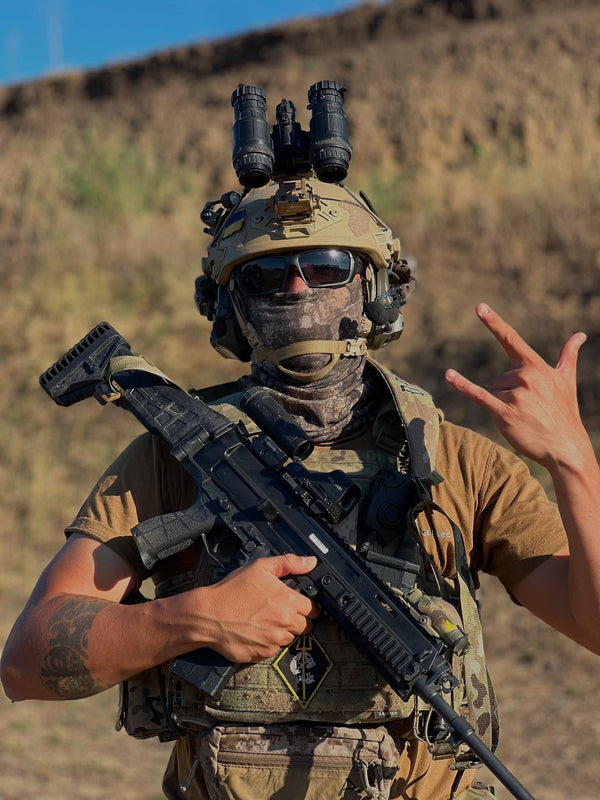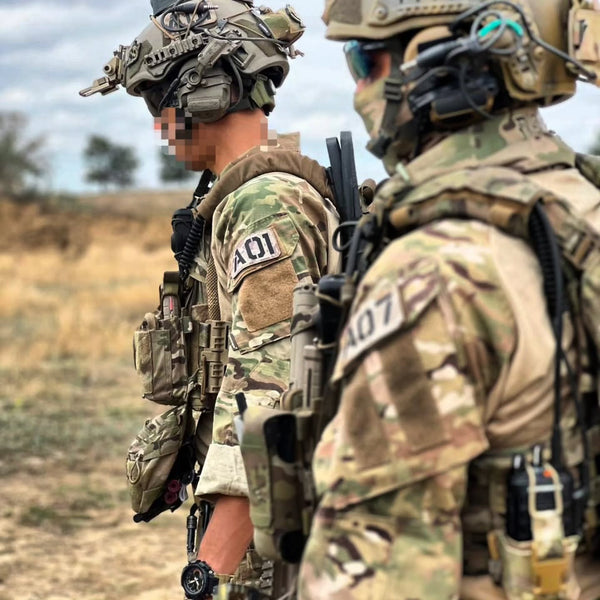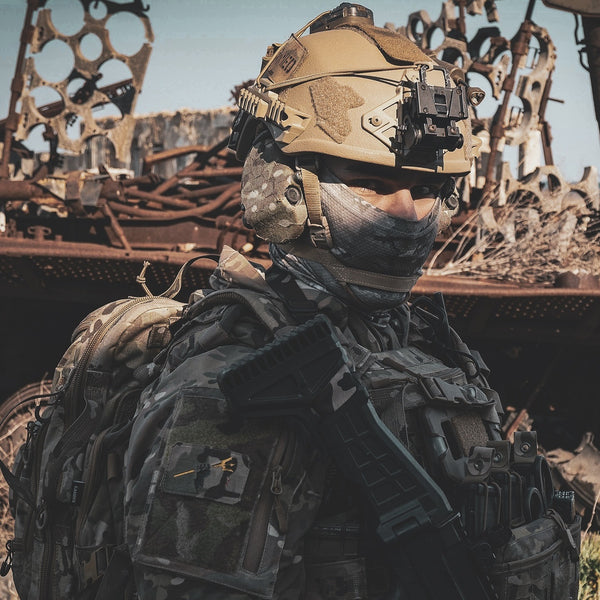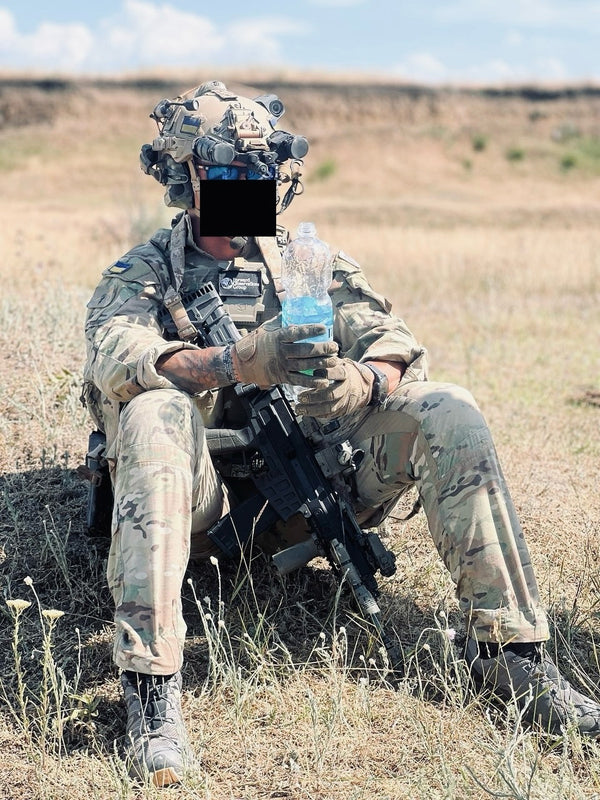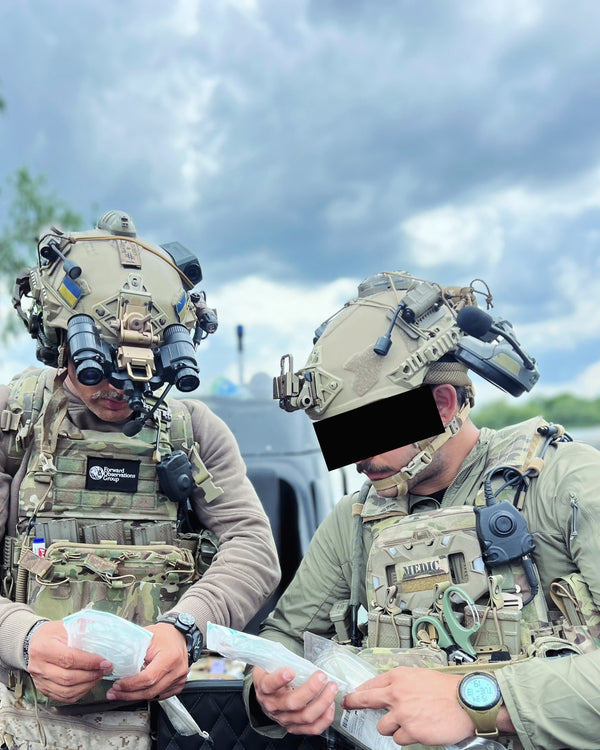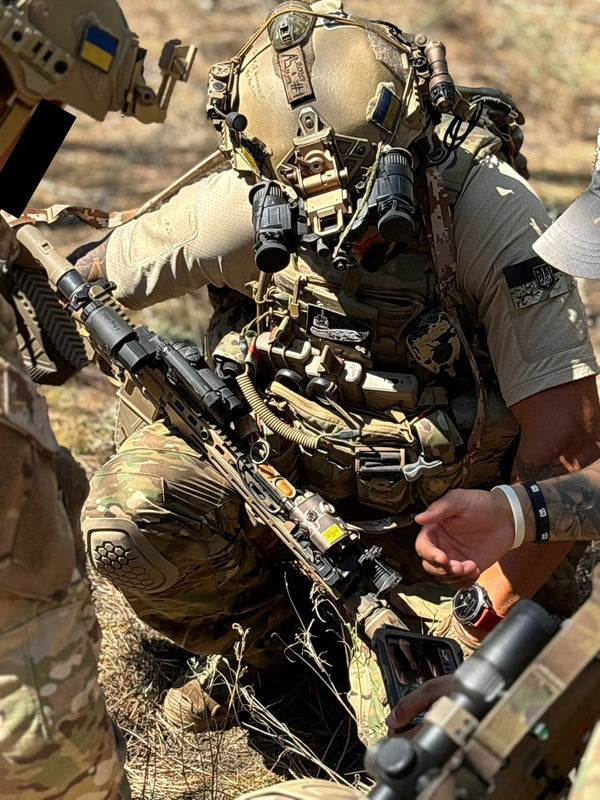


MOLLE (Modular Lightweight Load-carrying Equipment) is a modular load-carrying system developed for the US Army and introduced in 1997. It lets you attach pouches, holsters and accessories to a vest, plate carrier, belt or pack through a standard grid of nylon webbing called PALS. That way one carrier can be reconfigured for any task.
This guide covers what the name actually refers to, how the webbing grid is built, how gear locks onto it, which pouches go where, and where the system reaches its limits.
What MOLLE Stands For and Where It Came From
MOLLE is pronounced "molly". Strictly speaking, it named a whole family of military load-carrying components: rucksack, frame, fighting load carrier and pouches. What joins them together is PALS, the Pouch Attachment Ladder System — the grid of webbing rows sewn onto the gear.
In everyday use the distinction has disappeared. "MOLLE" now means any equipment that carries PALS-type webbing, and that is what "MOLLE gear" means in a product listing: a pack, vest or pouch built to plug into the same grid.
What it replaced. Before MOLLE, US troops carried ALICE (All-purpose Lightweight Individual Carrying Equipment), in service from 1973 to 1997. ALICE hung pouches from a belt and suspenders with metal clips, so where each item went was largely fixed. The Army's Natick labs developed MOLLE in the mid-1990s and introduced it in 1997. Widespread issue came only in the early 2000s, with the wars in Afghanistan and Iraq.
The PALS grid was invented and patented by the Army's Natick research centre. Since then it has become the de facto standard for modular gear far beyond the US military: allied armies, police units, hunters, outdoor brands and airsoft players all build on the same geometry.
PALS Webbing: The Grid That Makes It Work
MOLLE webbing — PALS — is a set of horizontal nylon rows sewn to a backing at fixed intervals. Its value comes entirely from the fact that every maker follows the same geometry.
|
Parameter |
Standard value |
|
Webbing width |
1 in (25 mm) |
|
Gap between rows |
1 in (25 mm) |
|
Bar-tack interval along each row |
1.5 in (38 mm) |
|
Base fabric |
Typically 500D or 1000D nylon |
The bar-tacks turn each row into a series of 1.5-inch channels, and each channel is one PALS "column". Pouch sizes are described in these units: a pouch listed as three columns wide needs about 4.5 inches of free webbing. Counting columns before you buy is the simplest way to know whether a pouch will fit where you want it.
The geometry has to be precise. The grid only locks if the pouch and the platform use the same spacing, so rows that are off by a few millimetres make a pouch weave crooked or refuse to seat. This is the main quality difference between well-made gear and cheap copies, and it is visible: measure a few channels with a ruler.
Laser-cut PALS. Newer carriers often replace sewn webbing with slots cut into a laminated panel. The slots keep the same 1-inch and 1.5-inch spacing, so standard pouches attach exactly as they do to sewn rows. The panel is lighter, sits flatter and has no raised loops to snag on brush.
How Gear Attaches to MOLLE
A MOLLE pouch has its own short rows of webbing on the back and one or more straps. The strap weaves alternately through the pouch's rows and the platform's rows, so the two grids interlock like a zip. Simply sliding the strap behind the platform webbing is not enough.
The correct weave, for a single strap:
- Hold the pouch against the platform with its top row just above the platform row you want to use.
- Pass the strap under the first platform row, then under the first pouch row.
- Continue alternating — platform, pouch, platform — down to the last row.
- Secure the end: press the snap closed or tuck the stiffened tip under the last row.
A correctly woven pouch should not tilt away from the carrier when you pull its top edge. If it does, a row was skipped.
Attachment types:
- Woven straps with a snap. The original military method, the "Natick snap": soft straps woven as above, closed with a push-button.
- Stiffened straps. Semi-rigid straps that weave the same way but tuck in instead of snapping. They are faster to thread and hold the pouch flatter.
- Clips. Polymer clips, such as MALICE clips, used where a pouch has no straps of its own. They are secure but slow to remove, and repeated fitting wears the bar-tacks.
- Hook-and-loop (Velcro). Not part of MOLLE, but often combined with it. Many chest rigs and plate carrier flaps use loop panels for low-profile pouches that come off in seconds.
Common mistake: threading the strap only through the platform's rows. The pouch then hangs from the strap instead of locking to the grid, and it flops as you move.
MOLLE Pouches and Where They Mount
A MOLLE pouch is any pouch with PALS webbing and straps on its back, so it can ride on any PALS surface. The pouch type decides where it should sit; the carrier decides how much room you have.
|
Pouch |
Carries |
Usual position |
|
Rifle magazines |
Carrier front or belt, on the side of your support hand |
|
|
First aid and trauma kit |
Where either hand can reach it; often rear of the belt, clearly marked |
|
|
Notebook, pens, light, small tools |
High on the chest |
|
|
Handheld radio |
Side or back, with a clear route for the antenna and cable |
|
|
Mixed gear |
Sides of the carrier or on a pack |
|
|
Empty magazines, gloves |
Rear hip on the belt |
The common platforms are the plate carrier (front, sides and cummerbund), the battle belt, backpacks and chest rigs.
Plan the layout before you buy. Count the free columns on each surface, keep heavy items close to your body's centre line, and make sure anything you need under stress can be reached by feel without looking down. Every pouch type above is in Tactical Pouches.
Why MOLLE Became the Standard, and Where It Falls Short
MOLLE won because it solved a problem older systems could not: one carrier, many configurations, and parts from different makers that fit each other.
Strengths:
- Interoperability. A pouch from one brand fits a carrier from another, provided both follow the PALS geometry.
- Configurability. The same plate carrier can be set up as an assault, medic or radio operator's loadout.
- Stability. A properly woven pouch is locked to the grid and does not swing or bounce.
- Load spread. Weight can be distributed across the chest, sides, belt and back instead of hanging from a single belt.
Limits:
- Weight and bulk. Sewn webbing adds material over the whole surface, which is why lighter carriers switch to laser-cut panels.
- Slow changes. Weaving takes minutes per pouch, so MOLLE suits a set-up-once layout rather than changes in the field.
- Wear. Clips and frequent re-weaving stress the bar-tacks over time.
- Snagging. Raised webbing rows can catch on brush and vehicle interiors.
- Sagging on soft platforms. Heavy pouches on thin fabric can pull the grid out of shape.
That is why modern gear often mixes systems: laser-cut PALS for weight, hook-and-loop panels for pouches that change often, and classic woven MOLLE for anything that must stay put.
FAQ
What does "MOLLE compatible" mean? It means the item has straps or slots built to PALS geometry, so it attaches to any PALS surface regardless of brand. Before buying, check two things: whether it uses woven straps or only a clip, and whether its column width fits the free space on your carrier.
Can I mix MOLLE gear from different brands? Yes, that is the point of the standard. In practice, spacing accuracy varies between makers, so check that a new pouch weaves straight and sits flush before relying on it.
Is MOLLE only for the military? No. The same webbing is used on police gear, hunting and outdoor packs, range bags and airsoft equipment.